Best Hair Transplant Clinic in Hyderabad & Gachibowli (FUE / FUT / DHI)
Rida Radiance is the best hair transplant clinic in Hyderabad & Gachibowli, offering advanced surgical hair restoration using FUE, FUT and DHI techniques. Achieve permanent, natural-looking results with expert hairline design, undetectable graft placement and India's leading hair transplant surgeons.
Transparent Pricing
₹30,000 – ₹1,50,000+
Per Procedure · Hair Transplant (FUE / FUT)
📅
1,000–4,000+
Grafts Per Session
⏰
6–8 Hours
Surgery Duration
📊
1 Procedure
Sessions Required
⚡
3–4 Months
Initial Growth Visible
📷
12–18 Months
Full Maturation
🎁
Permanent
Results Duration
Final cost depends on the number of grafts required, extent of baldness, donor area availability, technique selected (FUE vs FUT), and surgical complexity. A detailed cost estimate will be provided after your in-clinic surgical consultation, assessment of donor/recipient areas, and hairline design. Some patients may require staged procedures.
— Treatment at a Glance
Surgery, Recovery & Results
All data sourced directly from our clinical protocol and pricing guide.
📅
6–8 hrs
Surgery Time
Determined by donor availability and baldness extent.
⏰
12–18 mo
Full Maturation
Final density and appearance at 12–18 months.
⚡
3–4 mo
Initial Growth
New hair emerges from transplanted follicles.
⏱️
7–14 days
Recovery
Return to normal activities within 1–2 weeks.
🗓️
Lifelong
Permanent Results
Transplanted hair grows permanently for life.
— What Is Hair Transplant?
Surgical Hair Restoration (FUE / FUT)
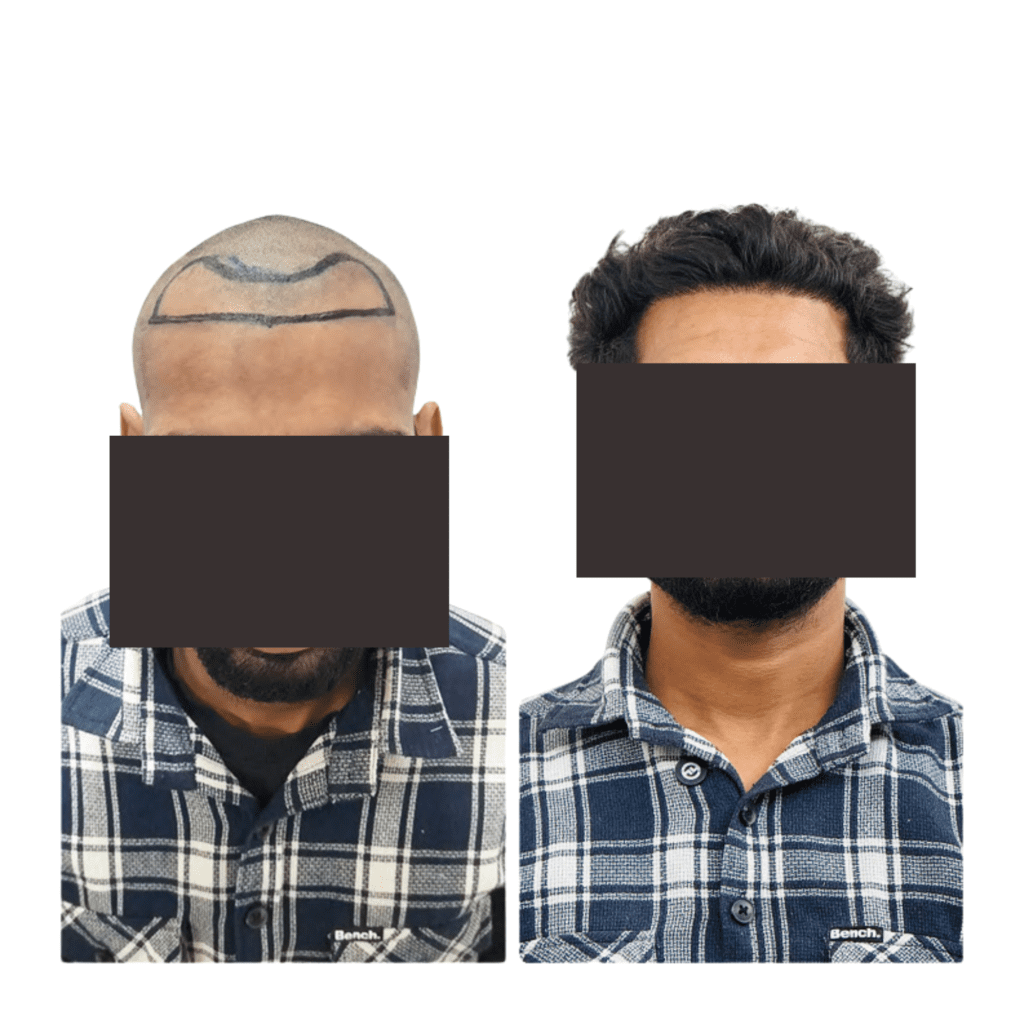
The transplanted hair is genetically programmed to grow permanently, providing a natural, lifelong solution to hair loss. Our surgeons use advanced surgical techniques to ensure natural hairline design, proper graft angulation, and undetectable results. Hair transplant is ideal for those with advanced or stable hair loss who want a definitive, permanent outcome without ongoing maintenance treatments.
Permanent Solution
Natural Results
Advanced Hair Loss
Hairline Restoration
Follicle Transplant
Surgical Restoration
— Progressive Results
Timeline & Improvements
Watch your hair journey unfold with measurable improvements at each stage.
Week 1
Post-Op Recovery
Post-operative swelling and mild discomfort. Dressings changed. Gentle washing begins. Light desk work possible.
Weeks 2–4
Healing & Normal Activity
Crusts resolve. Return to normal activities. Resume exercise. Hair washing routine normalized.
Weeks 4–8
Donor Heals, Shedding Phase
Donor area heals completely. Transplanted hair may shed (normal and expected).
Months 3–4
New Hair Growth Emerges
New hair emerges from transplanted follicles. Hair is fine initially but continues to thicken and strengthen.
Months 6–12
Density Improves Dramatically
Dramatic thickening and darkening. Density continues to improve. Results become natural and impressive.
Months 12–18
Final Maturation Achieved
Maximum density and pigmentation. Results are permanent and indistinguishable from natural hair.
— Technique Options
FUE vs FUT
Both techniques produce excellent results. Your surgeon will recommend the best approach based on your hair loss pattern, donor availability, and aesthetic goals.
💧
FUE (Follicular Unit Extraction)
Individual hair follicles extracted directly from the donor area using a micro-punch. Minimal scarring, faster recovery (7–10 days), ideal for short hairstyles and limited donor availability.
🧬
FUT (Follicular Unit Transplantation)
A thin strip of scalp tissue removed from donor area; follicular units extracted from strip and implanted. Maximizes graft count (2,000–4,000+), excellent for dense coverage and extensive baldness.
🔦
Natural Hairline Design
Our surgeons artistically design your hairline accounting for facial proportions, native hair angles, and future hair loss patterns to ensure a natural, undetectable result.
— Good to Know
Common Questions
Will the transplanted hair grow permanently?
Yes, permanently. Transplanted follicles retain their genetic programming to grow. They will continue growing throughout your life, just like native hair from the donor area.
Can I have multiple procedures?
Yes. If you need additional density or coverage, second or third procedures can be performed after 12+ months. Most patients achieve their goals with one well-planned session.
New hair growth emerges at 3–4 months. Visible density improvements at 6–8 months. Maximum, final results and natural appearance at 12–18 months post-op.
No. Local anesthesia is administered, so you feel no pain during the procedure. Post-operative discomfort is mild and managed with prescribed pain medications. Most patients describe it as manageable.
What if I continue to lose hair?
Pattern baldness may continue in non-transplanted areas. Your surgeon will design the hairline to account for this. You can prevent future loss with medical management (finasteride, minoxidil) if recommended.
— You May Also Like
Related Hair Treatments
🧬
Scalp PRP Therapy
Growth factor concentrate therapy for hair fall control and density improvement over 3–6 sessions.
💊
Hair Mesotherapy
Micro-injections of vitamins and nutrients directly into the scalp to nourish hair follicles.
✂️
GFC for Hair
Growth factor concentrate therapy for hair regrowth and density improvement — ideal alongside or after transplant.
Advanced Hair Restoration Starts Here
Consult our expert hair transplant surgeons to evaluate your donor area, discuss FUE vs FUT, design your ideal hairline, and plan permanent, life-changing results.
Why Rida Radiance is the #1 Hair Transplant Clinic in Hyderabad & Gachibowli
Looking for the best hair transplant in Hyderabad or a trusted hair transplant clinic in Gachibowli? Rida Radiance is the most preferred destination for permanent hair restoration in Telangana - serving patients from HITEC City, Madhapur, Kondapur, Kukatpally, Jubilee Hills, Banjara Hills, Financial District, Manikonda, Nanakramguda, Gachibowli and across India. Our board-certified surgeons deliver natural-looking, permanent results using advanced FUE, FUT, DHI and Bio-FUE techniques.
Hair Transplant Cost in Hyderabad - Transparent Pricing
At Rida Radiance, hair transplant cost in Hyderabad starts from INR 30,000 and goes up to INR 1,50,000+ depending on graft count, technique selected and donor availability. No hidden charges, free consultation, and easy EMI options are available.
Hair Transplant Techniques We Offer in Gachibowli
- FUE Hair Transplant in Hyderabad - Minimally invasive, no linear scar, faster recovery (7-10 days). Ideal for short hairstyles.
- DHI Hair Transplant in Gachibowli - Direct Hair Implantation using Choi pen for high density and precision angles.
- Bio-FUE - FUE combined with PRP / growth factors for enhanced graft survival and faster regrowth.
- FUT (Strip Method) - Maximum graft yield for advanced baldness (Norwood Grade 5-7).
Areas We Serve Across Hyderabad
Our Gachibowli clinic is centrally located and easily accessible from HITEC City Metro Station, Cyber Towers, Mindspace, Wipro Circle, Financial District, Raidurg, Nanakramguda, Khajaguda, Manikonda, Kondapur, Madhapur, Jubilee Hills, Banjara Hills, Kukatpally, Miyapur, Ameerpet, Begumpet and the wider Hyderabad metropolitan area. We also welcome international patients from the UAE, USA, UK and Africa with hair transplant tourism packages.
Why Patients Choose Rida Radiance
- Board-certified hair transplant surgeons with 10+ years of experience
- 4.9 star rating with 287+ verified Google reviews
- Natural hairline design - undetectable results
- Latest sapphire FUE and motorized punches
- Pre and post-op care, growth tracking at 3, 6 and 12 months
- Lifetime growth assurance on transplanted grafts
- Free consultation, transparent pricing, no-cost EMI
Book your free hair transplant consultation in Gachibowli today - Call +91 96769 27700