
- Home
- About Us
- Injectable Treatments
- Botox / Dysport / Xeomin
- Dermal Fillers
- Biostimulators
- Laser & Energy Treatments
- Fractional Laser
- IPL
- Radiofrequency
- Ultherapy / HIFU
- Chemical Peels
- Superficial Peels
- Medium Peels
- Deep Peels
- Microneedling
- Standard Microneedling
- RF Microneedling
- PRP Microneedling
- Thread Lifts
- PDO Threads
- Barbed Threads
Deep Chemical Peel
Peel
The most powerful chemical resurfacing treatment available — clinically designed to address severe sun damage, deep static wrinkles, and significantly compromised skin quality. A single procedure delivering results that last for several years.
Deep Peel Treatment Cost
Pricing at Rida Radiance is always stated upfront after a clinical assessment. Below is the published range from our official price guide.
Prices are approximate and may vary based on the treatment area (partial vs full face), severity of skin damage, clinical complexity, and specific protocol selected by your dermatologist. A personalised treatment quote will be provided after your in-clinic skin assessment and consultation. Pre-care products, if prescribed, may be an additional cost.
Maximum-Depth Resurfacing
for Lasting Renewal
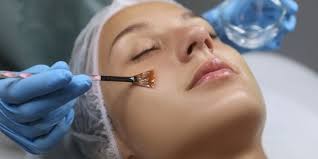
A deep chemical peel — most commonly formulated with Peel — penetrates through the epidermis and into the mid-to-deep dermis, triggering a controlled wound-healing response that replaces severely damaged skin with dramatically smoother, firmer, and more even-toned tissue.
Unlike superficial or medium-depth peels that require multiple sessions, the deep peel is a single-procedure treatment that delivers transformative, multi-year results. It is particularly effective for deep static wrinkles, extensive photoageing and sun damage, severe acne scarring, and significant skin laxity that has not responded adequately to lighter treatments.
Due to the depth of action and systemic considerations of, this treatment is performed under strict clinical protocols at Rida Radiance, with full pre-treatment preparation and supervised post-care throughout the recovery period.
Sessions, Downtime & Duration
All data below is sourced directly from our clinical protocol and pricing guide.
Common Questions
Who is a good candidate for a deep peel?
Ideal candidates have significant photoageing, deep static wrinkles, extensive sun damage, or severe acne scarring that has not responded to lighter treatments. Candidates are typically Fitzpatrick skin types I–III. A thorough medical and skin assessment is mandatory before proceeding.
Is the procedure painful?
Peels are performed with appropriate analgesia and sedation protocols as required. Patients typically feel a warming or burning sensation that is actively managed throughout the procedure. Post-treatment discomfort is managed with prescribed aftercare medications.
How long will my skin take to fully heal?
The skin typically re-epithelialises within 7–14 days. Redness and pink colouration may persist for several weeks to months, gradually fading as the dermal remodelling process completes. Most patients are comfortable returning to social activities after 10–14 days with appropriate coverage.
Can it be done on Indian skin tones?
Deep peels require careful patient selection for darker Fitzpatrick skin types due to pigmentation risk. Modified protocols, thorough pre-treatment preparation, and expert clinical supervision at Rida Radiance mitigate this risk significantly. Your suitability will be assessed at consultation.
Will I need more than one session?
In most cases, one deep peel procedure is sufficient to achieve the treatment objective. The depth and completeness of a single Peel session is what distinguishes it from all other peel categories — results last for several years from a single treatment.
What aftercare is required long-term?
Daily broad-spectrum SPF 50+ sunscreen use is non-negotiable and permanent following a deep peel. A clinician-prescribed medical skincare routine including retinoids, vitamin C, and peptides is recommended to maintain the quality of the resurfaced skin and prolong results.
Dramatically Renewed Skin.
One Procedure.
Speak with our expert dermatologists to determine whether a deep Peel is the right treatment for your skin concerns. A thorough, honest assessment — no pressure, no shortcuts.